
Transporting Sports Equipment: Bikes, Surfboards, Kayaks & More
Sports gear is among the most challenging cargo — long, irregular, fragile in unexpected places, and often expensive. Here's how to transport the most common gear types safely without buying a new car.
11 min read
Interior vs Roof vs Tow: Choosing Your Method
Before loading, decide on your transport method. The three options have different trade-offs:
Interior Loading
Pros: Equipment protected from weather and theft, no roof height clearance issues
Cons: Limits passenger and other cargo capacity
Roof Racks
Pros: Keeps boot free, suits long/awkward items, works for most car types
Cons: Increases fuel consumption 5–15%, height clearance issues, theft risk
Tow Bar Carriers
Pros: Doesn't affect roof height, good for bikes and kayaks
Cons: Requires a tow bar fitting, reduces rear visibility, long items may protrude beyond legal limits
Equipment Guide
Bicycles
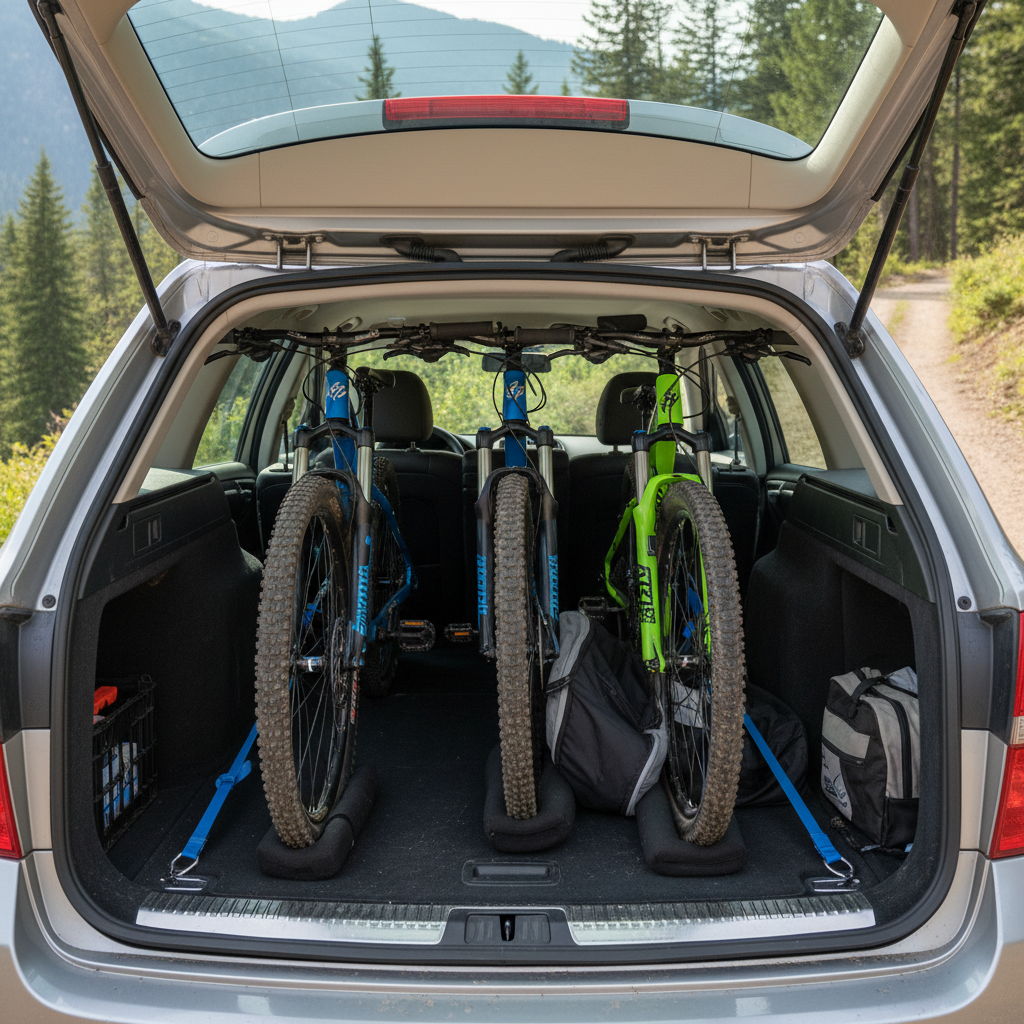
Most SUVs, wagons, some hatchbacksRemove the front wheel (30 seconds, no tools needed on quick-release axles). This reduces the length by ~45cm (18in) and makes most bikes fit flat in the boot of an SUV or wagon. Two bikes can fit in most large SUVs this way. Use a bike-specific rear carrier rack as an alternative for cars without adequate boot space.
Note: Protect the drivetrain (chain and rear derailleur) with a cloth or bubble wrap — these scratch interior surfaces.
Surfboards
Wagons, SUVs with roof racks, some hatchbacks (interior diagonal)Short boards (under 6ft/183cm) often fit diagonally inside a hatchback or SUV with rear seats folded. Longer boards require roof racks with padded surfboard carriers. Always use a board bag for interior transport and ensure the nose doesn't obstruct the driver's view.
Note: Sunlight through windows can delaminate boards — use a reflective dash mat if parked in direct sun.
Kayaks & Canoes
Requires roof racks for all car typesJ-cradle carriers on roof racks are the most space-efficient option — kayaks sit on their side, reducing wind resistance and roof space. Foam saddles work for shorter kayaks. Always use bow and stern tie-downs in addition to the main strap — this is a legal requirement in most Australian states.
Note: Check your roof load rating before loading. A loaded kayak with roof rack can weigh 30–50kg (66–110lb).
Ski / Snowboard Gear
Most vehicles with proper bagsSkis and boards are long and thin — use a dedicated ski/board bag. Most pairs of skis with boots and poles fit inside a wagon or SUV with seats folded. Roof-mounted ski carriers are the alternative. Interior transport protects equipment from theft and icy conditions.
Note: Ski boots are surprisingly bulky — factor their volume into your packing plan separately from ski bags.
Golf Clubs
Most sedans, SUVs, and wagonsA standard golf bag (with clubs) is approximately 130cm (51in) long, 30cm (12in) wide, 30cm (12in) deep. It fits in the boot of most sedans standing upright alongside the side wall, or diagonally with one rear seat partially folded in a hatchback. A travel bag with wheels adds bulk but protects clubs from other luggage.
Note: Club heads and shafts can damage other items — always protect them with head covers and store separately from fragile items.
Legal Requirements for Overhanging Loads
In Australia, items that protrude beyond the rear of your vehicle must comply with load restraint guidelines. Key rules:
- Items may protrude up to 1.2 metres (4ft) beyond the rear of the vehicle
- Any protrusion over 1 metre (3ft 3in) requires a red flag or marker at the rearmost point (min. 300mm × 300mm / 12in × 12in)
- Loads must not protrude from the front of the vehicle at all
- All roof-mounted items must be secured with straps rated for the load weight — ratchet straps are recommended over rubber bungees
Check If Your Gear Fits
Enter your car and equipment dimensions into stowey to check fit before loading day.
Trip Planner