Multi-Sport Weekend Car Packing: The Ultimate Gear Tetris Guide
It's Friday afternoon. You're heading out for a weekend that involves mountain biking on Saturday morning, a surf at the coast that afternoon, and camping that night. The problem? Your bike, surfboard, tent, sleeping gear, cooler, and overnight bag all need to fit in the same car — and they don't want to play nice with each other. Here's how to win the gear Tetris.
The Problem: Why Multi-Sport Is Harder Than Moving House
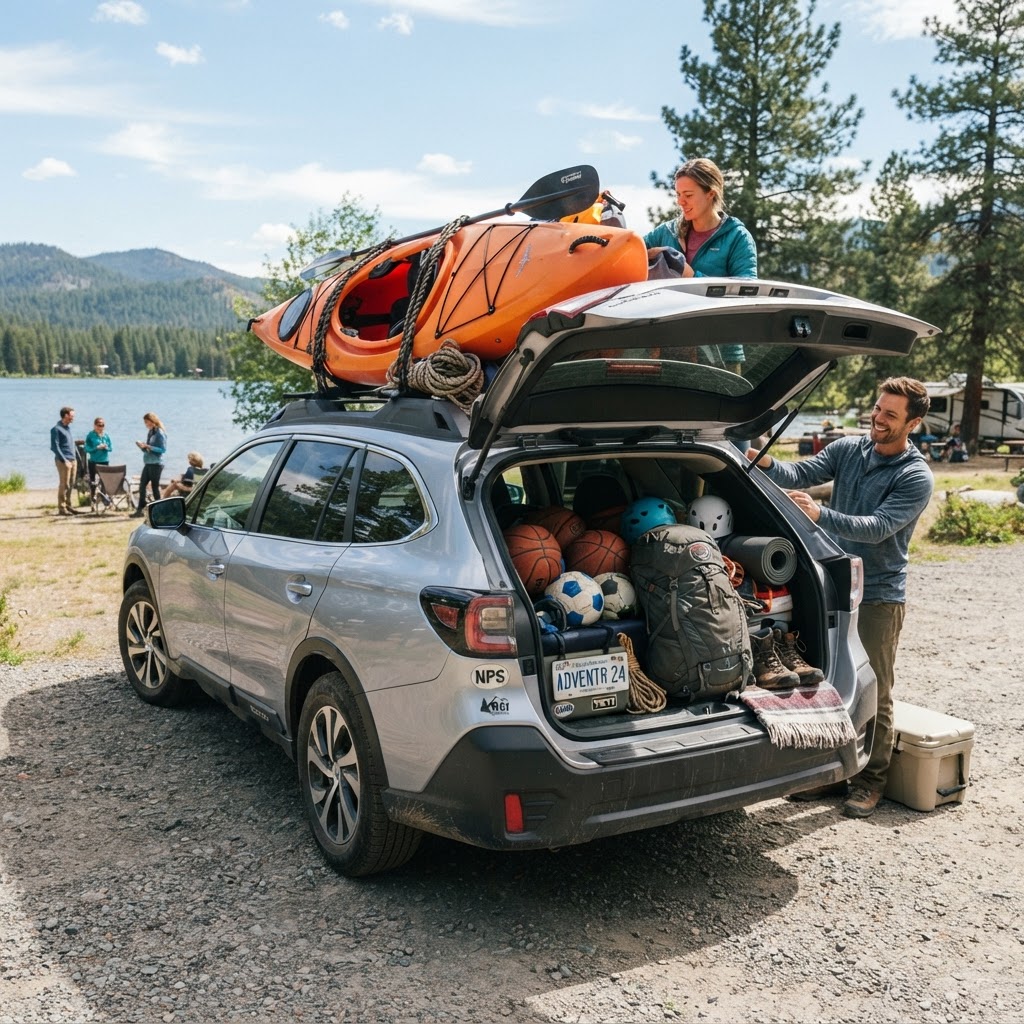
Moving furniture is predictable — boxes are rectangular and stack neatly. Multi-sport gear is the opposite: bikes have handlebars that snag on everything, surfboards are long and flat and scratch easily, camping gear is bulky but compressible, and wetsuits smell. Every item has a different shape, a different fragility level, and a different urgency for access.
The core challenge is gear incompatibility. A surfboard laid flat takes up the entire boot floor. A bike stood upright blocks rear visibility. A cooler needs to be accessible at lunch, but the tent doesn't. You can't just throw it all in and hope — you need a layering strategy.
Rule 1: Roof First, Interior Second
The single biggest mistake people make is trying to fit everything inside the car. If you're carrying more than two bulky items, the roof is your friend — and the right rack setup is the difference between a 20-minute load and an hour of frustration.
- Surfboard or SUP: Roof rack with foam pads or a dedicated surf carrier. Always use bow and stern tie-downs for anything over 200cm (79in).
- Bike: Fork-mount roof carrier or a towbar-mounted rack. The towbar rack is faster to load and doesn't add height, but obscures the numberplate (legally requires a light board in Australia).
- Kayak: J-cradles free up roof space for a second item alongside it.
- Inside the car: Reserve the boot and rear seats for camping gear, cooler, and bags — the soft, stackable stuff.
The general principle: rigid and awkward goes on the roof, soft and compressible goes inside. This alone solves 80% of packing conflicts.
Rule 2: The Layering System
Think of your boot like a layer cake. Each layer has a purpose, and the order matters because it determines what you can reach first when you arrive at your destination.
Layer 1 — The Foundation (loaded first, last out):
- Tent (packed in its bag, laid flat along the boot floor)
- Sleeping bags and mats (compressed in stuff sacks, tucked into gaps)
- Camping stove and fuel (upright, secured against side walls)
Layer 2 — The Middle (structural filler):
- Cooler or esky (pushed to one side — it's heavy and shouldn't shift)
- Overnight bags and clothing (soft, fills irregular gaps around the cooler)
- Folding chairs and table (slid in vertically alongside the cooler)
Layer 3 — The Top (loaded last, first out):
- Wetsuit in a dry bag (on top — you'll need it at the beach, not at camp)
- Towels and beach gear (quick access)
- Snacks and water bottles (accessible from the top without unpacking)
Rule 3: The Gear Conflict Map
Some gear combinations actively fight each other. Here's how to handle the most common conflicts:
Bike + Surfboard
Both want the roof. Solution: bike on a towbar rack, surfboard on the roof. If you don't have a towbar, put the bike inside with the front wheel removed and the surfboard on the roof. Never stack them on the same roof rack — the bike's pedals will scratch the board.
Cooler + Tent
The cooler is heavy and rigid; the tent is light and compressible. Put the cooler against the rear seat backrest (it won't slide forward under braking) and the tent flat on the boot floor in front of it. Never put the cooler on top of the tent — the weight will bend tent poles.
Wetsuit + Everything Else
Wet wetsuits stink and get everything damp. Always pack wetsuits in a dedicated dry bag placed on the very top layer. If you have a wet one on the way home, put it in the dry bag and stash it on the roof rack or in the footwell — never in the boot with sleeping bags.
Bike Inside + Rear Seats Folded
If the bike goes inside (front wheel off, chain side up), lay a blanket over the frame where it contacts the seats to prevent grease stains. The surfboard then goes on the roof. The bike drivetrain should face up so gravity doesn't pull chain oil onto your upholstery.
Rule 4: Vehicle-by-Vehicle Strategy
Different car types handle multi-sport loads very differently. Here's how to approach it based on what you drive:
Hatchback (e.g., VW Golf, Toyota Corolla): With rear seats folded, you get a flat load area of roughly 150cm (59in) deep. A bike with the front wheel removed fits diagonally. A short surfboard (under 200cm / 79in) can go inside diagonally with the seats down. For anything bigger, you'll need roof racks. A hatchback works for one person's multi-sport gear; two people will need a roof setup.
SUV (e.g., Subaru Forester, Toyota RAV4): The sweet spot. With seats down you get 170–190cm (67–75in) of load length and enough height for a bike upright with the front wheel on (if you remove the seat post). One bike inside + one surfboard on the roof is the classic SUV weekend setup.
Wagon (e.g., Subaru Outback, VW Passat): Wagons offer the longest continuous load area when seats are down — often 190cm+ (75in+). A bike fits inside without removing the front wheel on many wagons. That frees the entire roof for boards. Wagons are the best all-round multi-sport vehicle.
Ute / Pickup: The tray handles dirty gear (bikes, wetsuits, firewood) while the cabin stays clean for camping gear and overnight bags. Use tie-down points on the tray for bikes and boards. Keep soft bags in the cabin or under a tonneau cover.
Sedan: The hardest vehicle for multi-sport. The boot opening is narrow and the rear seats don't fold flat. You'll almost certainly need roof racks for the board and possibly the bike. Reserve the boot for the cooler and overnight bag only.
Rule 5: The Accessibility Test
Here's the scenario that ruins weekends: you arrive at the beach for a quick surf before heading to camp, and your wetsuit is buried under the tent, cooler, and three bags. You spend 20 minutes unpacking the entire car on the side of the road.
Before you close the boot, ask yourself: what do I need first? Map out your weekend chronologically:
- Arriving at the trailhead? Bike and helmet need to be accessible.
- Hitting the beach first? Wetsuit, towel, and sunscreen on top.
- Setting up camp last? Tent and sleeping gear can go in first — they're not needed until evening.
Pack in reverse order of use. Last thing you need goes in first; first thing you need goes in last.
Rule 6: Protect Your Gear — and Your Car
Multi-sport gear is expensive and your car's interior isn't designed for it. A few cheap precautions save a lot of money and frustration:
- Boot liner: A rubber or heavy-duty boot liner ($40–$80) protects against sand, salt water, and chain grease. It's the best investment you'll make for multi-sport weekends.
- Board bag: Even a basic board sock ($30–$50) prevents wax transfer and scratches when the board is inside the car or on the roof.
- Chain guard: If a bike goes inside, wrap the chain and derailleur in an old towel or use a dedicated chain cover. Chain oil does not come out of upholstery.
- Separate wet and dry: Use a dry bag or plastic tub for wetsuits, towels, and anything damp. Never mix wet gear with sleeping bags or clothing.
- Secure loose items: In a hard stop, a loose pump, multi-tool, or water bottle becomes a projectile. Keep small items in a single bag or box, not scattered across the boot.
The Weekend Load-Out Checklist
Here's a quick reference for a typical two-sport overnight weekend (bike + surf + camp). Adjust quantities for your group size:
On the roof:
- Surfboard (in board bag, secured with cam straps + bow/stern tie-downs)
- Bike on towbar rack (or fork-mount roof carrier if no towbar)
Boot — Layer 1 (bottom):
- Tent (flat on boot floor)
- Sleeping bag + mat (in stuff sacks, in gaps around tent)
Boot — Layer 2 (middle):
- Cooler/esky (against rear seat)
- Camping stove + fuel (upright, beside cooler)
- Folding chair(s) (vertical, alongside cooler)
Boot — Layer 3 (top):
- Overnight bag
- Dry bag with wetsuit + towel
- Snacks and water
In the cabin:
- Helmets, bike tools, spare tube
- Phone, wallet, keys, sunscreen
Plan Your Multi-Sport Load Before You Pack
Use stowey to check your gear dimensions against your car's cargo space — so you know exactly what fits inside and what needs to go on the roof.
Trip Planner