
Apartment Moving Hacks: Lifts, Stairs, and Tight Spaces
Moving into or out of an apartment adds a layer of logistical complexity that doesn't exist with a house. Lift access, narrow stairwells, restricted parking bays, and awkward doorways each require their own strategy.
10 min read
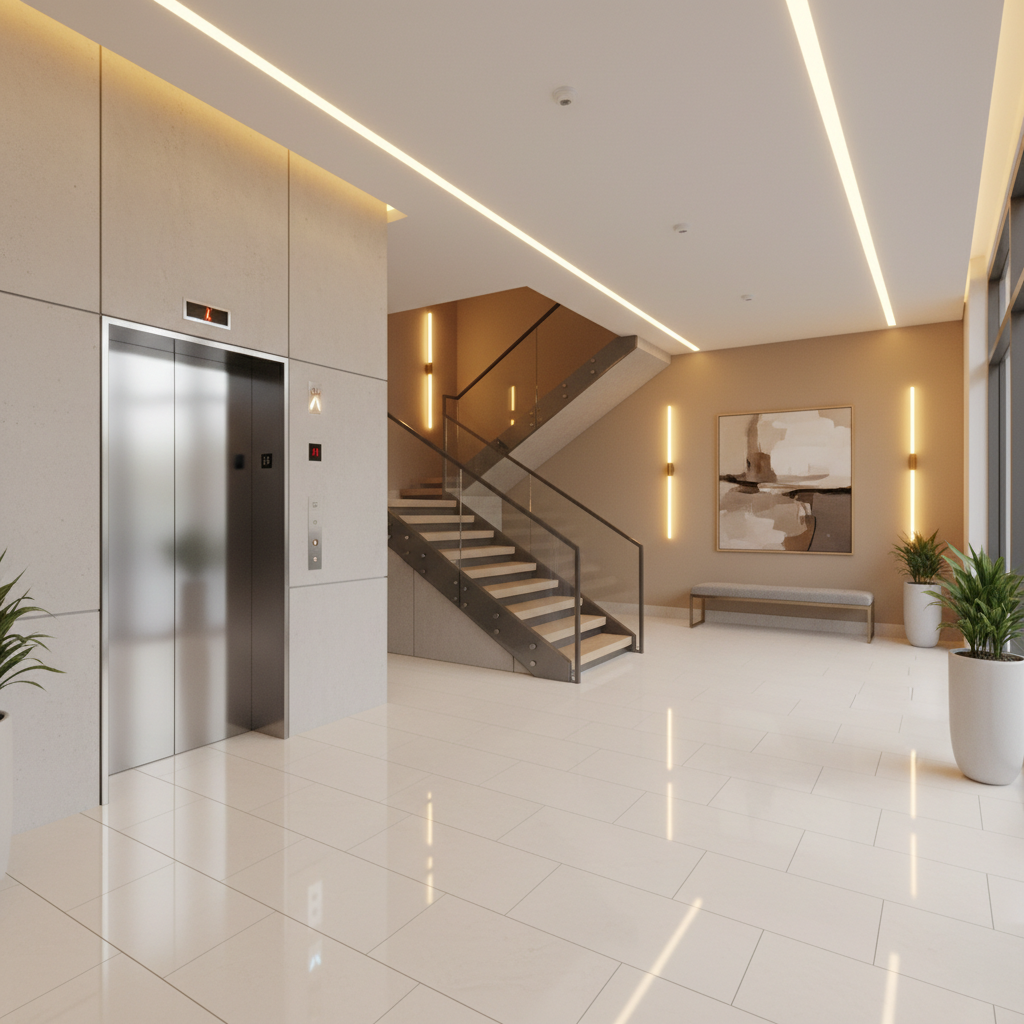
Before Moving Day: Essential Pre-Checks
Apartment moves that go wrong usually go wrong because someone didn't check something in advance. Do all of these before your moving day:
Book the lift
Most apartment buildings with service lifts require booking in advance. Call building management 1–2 weeks ahead. Ask about: maximum lift dimensions, maximum load (many lifts have 400–600kg (880–1,300lb) limits), and hours of access (most buildings restrict noisy moves to business hours).
Measure doorways and stairwells
Take a tape measure to the apartment before moving day. Measure: the front door width and height, any internal doorways furniture needs to pass through, the stairwell width at the tightest point (usually where it turns), and the lift interior dimensions.
Organise parking
Most apartments have very limited visitor parking. For moving day, contact the building manager about temporary loading zone use, or apply to your council for a temporary no-parking permit on the street outside. Moving with no organised parking is a major headache.
Check body corporate rules
Some strata-managed buildings have rules about moving times, protection of common areas (lift padding, floor protection), and even which entrance movers can use.
The 'Will It Fit' Problem: Doorways and Stairs
Large furniture pieces fail at one of three points: the front door, internal doorways, or the stairwell (if there's no lift). Before moving any large piece, measure all three.
Standard Australian Apartment Dimensions
For sofas and beds that won't fit through doorways straight, try the "tilt-and-angle" technique: tilt the sofa vertically, then angle it through the doorway. This works for most sofas up to 2.2m (7ft 3in) in length through standard doorways.
Buying Furniture That Will Actually Fit
If you're furnishing an apartment, measure before you buy. Items to be particularly careful about:
- Sofas: Measure assembled sofa dimensions AND check if it can be disassembled (many modern sofas have removable legs and separable sections). Cross-reference with your doorway measurement.
- Bed frames: Most bed frames disassemble. The headboard is often the awkward piece — measure its width and height and check your doorway clearance.
- Wardrobes: Built-in or assembled-in-place wardrobes (from IKEA etc.) are far preferable for apartments — they come as flat-pack and are built inside the room.
- Dining tables: Extendable tables that start smaller and only extend when needed are far more apartment-practical than large fixed tables.
Car Packing Strategy for Apartment Moves
Apartment moves require more trips because you're carrying items one at a time through corridors and lifts rather than direct from car to room. Strategies that help:
- Pack the car by room, not by category — so you can unload one room's worth at a time and go straight to the right room
- Use a trolley or sack truck for multiple boxes — carrying one box at a time through a lift and corridor is painfully slow
- Label boxes with floor and room, not just room — "Level 4, Kitchen" saves you hunting for paper in the lift lobby
- Recruit help specifically for the lift period — having someone hold the lift while others load and unload dramatically speeds up the process
Plan Your Apartment Move
Use stowey to calculate how many car loads your apartment move will take — and whether you need to hire a van.
Trip Planner