Hiring a Trailer vs Hiring a Car: Which is Better?
Moving something big? You have two main options: hire a trailer to tow behind your own car, or hire a cargo van. Both get the job done — but in very different situations. Here is how to pick the right one.
The Core Difference
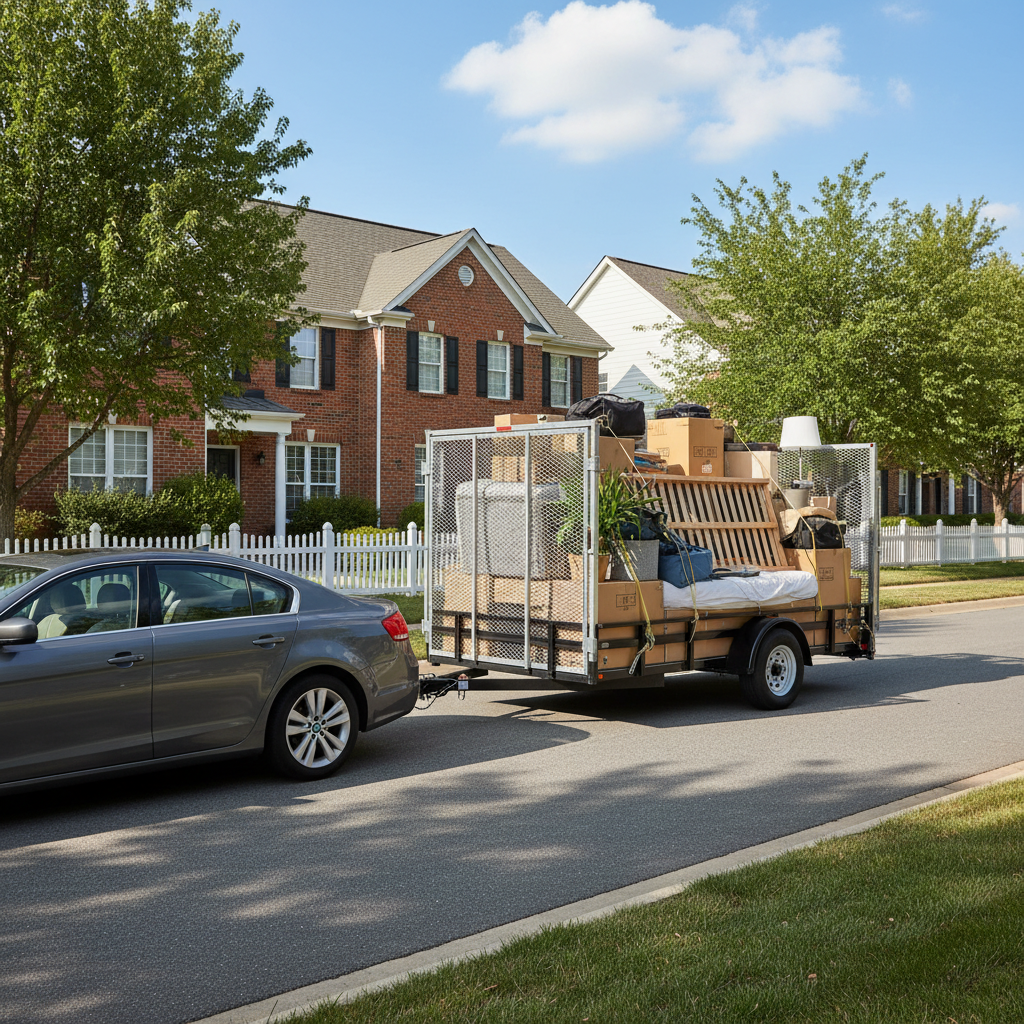
A trailer hire means attaching a platform or box trailer to your own car. You get a lot of capacity for relatively little cost, but your car needs a towbar and you are responsible for loading, securing, and safely driving with a trailer in tow.
A hire car (cargo van) is self-contained — you drive it like any normal vehicle. Your items are inside the van, protected from weather, and there is no towing involved. It costs more but is significantly easier to drive and more versatile.
Side-by-Side Comparison
| Factor | Trailer Hire | Cargo Van Hire |
|---|---|---|
| Cost (half day) | $40–$80 | $80–$160 (cargo van) |
| Licence required | Standard car licence (trailer up to 750kg (1,653lb) ATM) | Standard car licence |
| Tow vehicle needed | Yes — must have a towbar | No — self-contained |
| Capacity | 1–2 tonne (2,200–4,400lb) payload, 2.4m+ (8ft) long | Van: 600–1,200kg (1,300–2,600lb), 2.5–4m (8–13ft) long |
| Loading height | Low — easy to slide furniture on | Van: higher step-in, but weatherproof |
| Weather protection | None (unless enclosed) | Full weather protection |
| Parking / manoeuvring | Harder — wide turns, no reverse sensors | Easier — drives like a normal vehicle |
| Fuel cost | Your car's fuel, reduced economy | Included in hire rate |
| Insurance | Often included; check tow vehicle policy | CDW available from hire company |
| Availability | Very widely available (Bunnings, U-Haul, etc.) | Available from car hire companies |
When to Choose a Trailer
- You already have a towbar. If your car can tow, a trailer is almost always the cheaper option for a one-off job.
- You need a lot of flat space. Open trailers are ideal for long timber, sheet materials, or awkwardly shaped items that will not fit inside any van.
- Short trip, dry weather. Open trailers expose your load to the elements, so they are best for short runs on dry days.
- Budget is tight. Half-day trailer hire often costs $40–$80 at Bunnings, U-Haul, or local hire shops.
- You need very high payload. A heavy-duty trailer can carry 2+ tonnes.
When to Choose a Hire Van
- You do not have a towbar. Getting a towbar fitted costs $300–$800+ — probably more than the van hire itself for a one-off job.
- You are moving house. A van lets you stack boxes and furniture safely, load in bad weather, and leave items secured overnight.
- You are doing long-distance. Towing for hours on a highway is tiring and uses significantly more fuel.
- You have fragile items. TVs, appliances, and furniture are protected inside a van.
- You are not confident towing. Backing a trailer into a driveway or car park is genuinely tricky. A van is just driving.
Trailer Tips for Beginners
- Weight distribution matters. Put 60% of the weight over and in front of the axle. Too much weight behind causes dangerous trailer sway.
- Check your tow rating. Every car has a maximum towing capacity. Do not exceed it.
- Trailers over 750kg (1,653lb) ATM require brakes in Australia.
- Tie everything down. Legally, you are responsible for your load. Ratchet straps are essential.
- Reversing takes practice. The steering wheel moves in the opposite direction to where you want the trailer to go. Go slowly.
The Middle Ground: Enclosed Trailers
If you want trailer pricing with van-like weather protection, an enclosed box trailer is worth checking out. They are available from most major hire companies and offer lockable, weatherproof storage at roughly trailer prices.
Not Sure What Will Fit?
Use stowey to check your items against van or car dimensions before you book. Takes 2 minutes.
Try the Free Calculator