
Roof Racks: What You Can (and Can't) Move on Top
Folding the seats gets you far — until you meet an item that's simply too long, too wide, or too awkward to go inside. That's the moment the roof earns its keep. But a roof load done wrong is dangerous, noisy, and expensive. Here's how to know what belongs up top, what never does, and how to get it home safely.
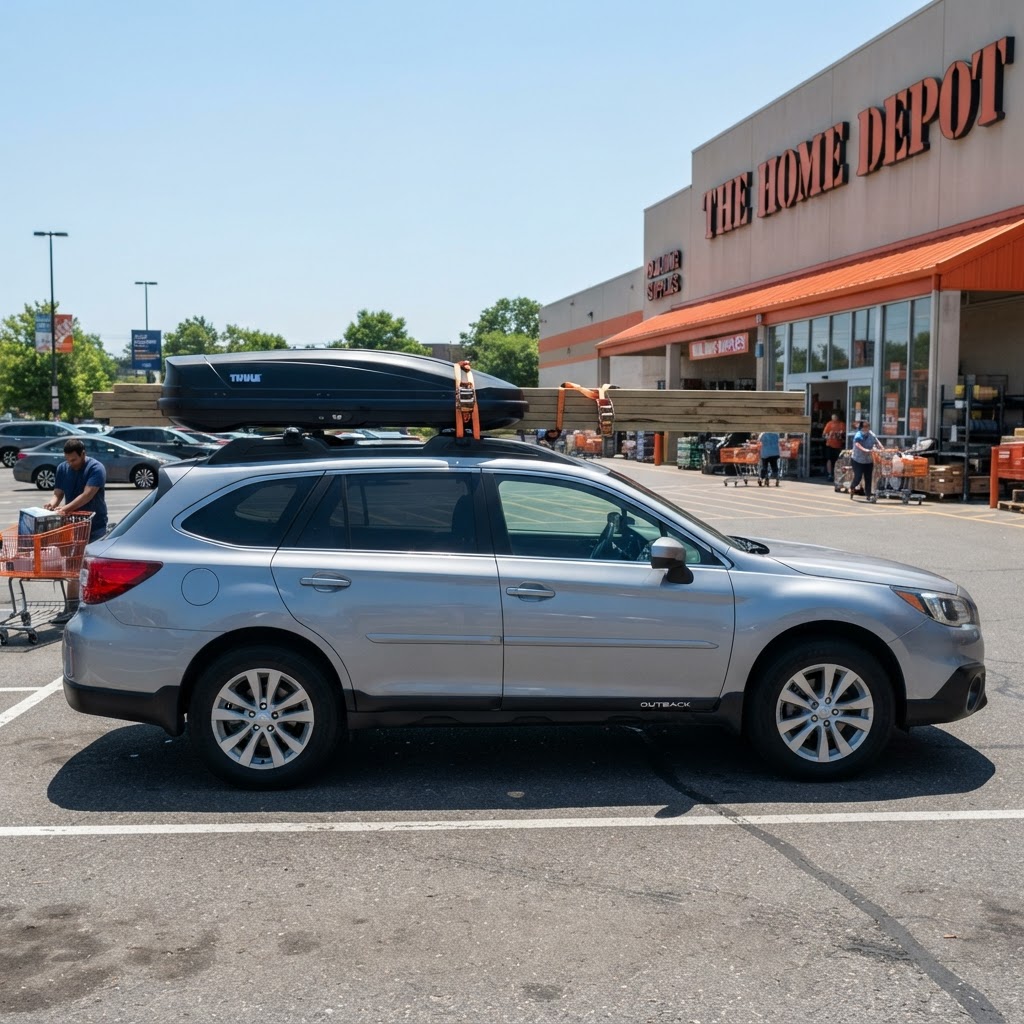
When the Roof Beats Folding the Seats
Roof racks aren't about adding volume — you'll rarely carry more total stuff, just different stuff. The roof wins in three situations:
- Items longer than your load area. 2.4m (7ft 10in) timber, ladders, pipes, and long roof-box loads don't fit in any wagon with the tailgate shut.
- Dirty or wet gear you don't want inside — muddy tyres, a wet kayak, a swag that's been on the ground all weekend.
- A full boot already. Camping gear inside, boards and bikes up top — the classic multi-sport split.
If your only problem is volume — a boot that's 10cm (4in) too small — folding seats, better packing, or a second trip beats a roof load. Roof transport adds fuel use, noise, and a real safety burden.
Know Your Rating: The Numbers on the Roof
Every car has a maximum roof load — typically 60–75kg (132–165lb) including the weight of the rack itself for passenger cars. That's a dynamic rating, meaning while driving at speed, over bumps and crosswinds. A static rating (parked, e.g. for a roof tent) is higher, but only applies when stationary.
- Subtract the rack's weight first. A heavy steel platform can eat 20–30kg (44–66lb) of your allowance before you load a single item.
- The rating assumes the load is spread and secured properly. One heavy item at one end is worse than the same weight spread out.
- A higher centre of gravity changes how the car handles — brake earlier, corner slower, and expect extra movement in crosswinds.
The Four Main Systems
Crossbars on rails: the do-everything baseline. Fit crossbars to factory or aftermarket rails and you can carry long flat loads, and mount carriers for bikes, skis, kayaks and boxes.
Platform racks: a full mesh or slatted floor across the roof. More carrying flexibility and easier strapping, but heavier and pricier — and they consume more of your weight rating.
Roof boxes (pods): lockable, weatherproof, aerodynamic-ish. Best for soft, light, valuable items you want out of sight — snow gear, camping gear, luggage. They typically add 40–60cm (16–24in) of height, so check your garage and car park clearances before you drive off.
Specialised carriers: fork-mount bike carriers, J-cradles for kayaks, ski boxes, canoe bars. If you do one sport regularly, the right carrier beats improvising with straps every single time.
What Travels Well Up Top — and What Never Does
Good roof loads: long, light, weather-tolerant
Timber (wrapped in plastic or strapped tight), ladders, PVC conduit, kayaks and canoes, skis and snowboards, swags and tents (in bags), pipe and tube, lightweight luggage in a roof box.
Bad roof loads — keep these inside or don't move them on the roof
Heavy items: a load of bricks, a toolbox, a generator — weight belongs low in the car, not two metres in the air. Flat-pack chipboard furniture: long flat boxes flex and vibrate in the airflow, and chipboard joints crack — this is the single most common roof-load mistake. TVs and electronics: vibration and weather are their enemies. Anything that can't get wet or dusty unless it's inside a sealed roof box.
How to Strap a Roof Load Properly
Most roof-load failures come down to the same few mistakes. The checklist:
- Use cam straps, not bungee cords. Bungees stretch and let the load shift. Straps only tighten.
- Strap to the rack, not to door seals or gutters. Loop around the crossbar or platform, then over and through the load.
- Long loads get bow and stern lines — a strap from each end of the item down to a solid point at the front and rear of the car. This is what stops a 2.4m (8ft) length becoming a spear under braking.
- Twist the straps a half turn where they're exposed — it stops the classic high-speed whistle.
- Re-check after 10–20 minutes of driving. Loads settle, straps stretch warm. Every serious hauler stops once and re-tightens everything.
- Lift with two people. Getting a load down at the end of a trip, when you're tired, is when backs get hurt.
The Everyday Realities: Height, Fuel, and Noise
A loaded roof can add 40–70cm (16–28in) of height. Most multi-storey car parks have around 2.1m (6ft 11in) clearance — many family cars with a roof box won't fit. Measure before you drive in, not while you're wedged under the boom gate.
Expect fuel consumption to rise by roughly 10–20% at highway speeds with a loaded rack, more with a box. That's before the extra wind noise. It's another reason the roof is for items that can't go inside, not a default storage upgrade. If your racks live on the car empty, take five minutes to remove them — you'll notice it at the bowser.
Roof vs Boot: The Two-Question Decision
Before you heave anything onto the roof, ask: 1) Does it fit inside at all? and 2) Is it light and weather-tolerant? If it fits inside, it goes inside — safer, cheaper, faster. If it doesn't fit inside, check whether it's roof-suitable using the lists above. Only the items that fail both tests need a trailer or a bigger vehicle.
Run your whole load through a packing calculator first — you'll often find that what looked like "definitely needs the roof" actually fits with the seats folded and a smarter loading order.
Check Inside First — Then Resort to the Roof
Use stowey to test your load against your boot with the seats folded. You might not need the roof at all.
Try the packing calculator