
Protecting Fragile Items: Glassware, Art & Antiques in Transit
Most moving damage is preventable. The items most commonly broken during moves — glassware, mirrors, artwork — all have well-established packing techniques that professional movers use. This guide covers all of them.
10 min read
The Fundamentals of Fragile Item Packing
Three principles underpin all effective fragile item packing:
No movement = no breakage
An item that cannot move inside its box cannot break from impact. Fill every air gap. A box that rattles when shaken is not safely packed.
Separate every item
Items touching each other will bang together in transit. Even soft materials like stacked plates need paper between each one.
Orient for strength
Plates are strongest on edge, not flat. Glasses survive better standing upright. Pack items in the orientation they're designed to be used or stored.
Packing by Item Type
Glassware & Crockery
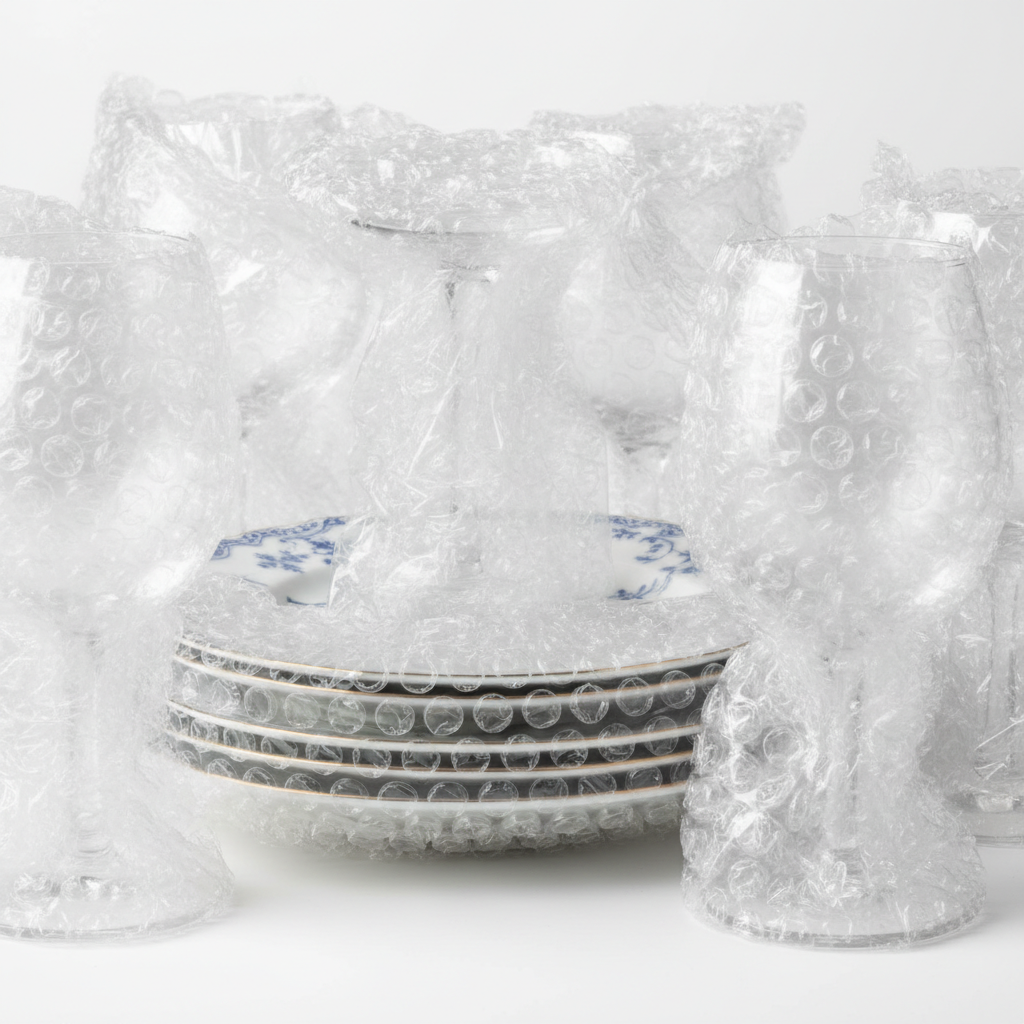
Wrap each glass individually in paper or bubble wrap, then pack vertically (standing up) — never flat. Plates pack flat, separated by paper. Fill all air gaps with crumpled paper. Label the box 'FRAGILE — THIS SIDE UP' on all four sides.
Pro tip: Glasses in their original boxes (if kept) are remarkably well protected. Save the packaging from quality glassware.
Mirrors & Picture Frames
Use a purpose-made picture/mirror box or DIY with two cardboard sheets taped in an X across the glass. Wrap the frame in bubble wrap and secure with tape. Transport vertically, never flat. Pack snugly so the item cannot move inside the box.
Pro tip: Write 'GLASS' and the approximate dimensions on the box — movers and future you will appreciate it.
Artwork & Prints
Unframed prints: roll loosely (don't over-tighten) and place in a poster tube. Framed artwork: protect corners with foam corner guards, wrap in glassine paper (not cling wrap, which can damage prints), then bubble wrap. Transport facing a padded surface.
Pro tip: For valuable or irreplaceable artwork, a professional art transport company is worth the cost.
Antiques & Collectibles
Disassemble where possible. Wrap each component separately. Use acid-free tissue for items with delicate surfaces (gilt, enamel, lacquer). For ceramics and porcelain, pack in a box within a box — fragile item in its wrapped box, then that box inside a larger box with foam padding on all sides.
Pro tip: Photograph valuable pieces before packing — the photos support an insurance claim if damage occurs.
Lamps & Lighting
Remove bulbs and shades separately — never transport with bulbs in. Shades are best transported wrapped in tissue paper, not bubble wrap (which can leave marks). Lamp bases: wrap the base in bubble wrap, the shade separately in tissue. Use a large soft-fill box for the shade.
Pro tip: Lamp shade boxes are ideal if kept. If not, large hat boxes from department stores work well.
Where to Put Fragile Boxes in Your Car
Even a perfectly packed fragile box can break if loaded incorrectly in the vehicle:
- Never stack heavy items on top of fragile boxes. Fragile boxes should be the last layer loaded and sit on top of heavier items.
- Wedge boxes so they cannot slide. Use soft items (blankets, clothing bags) to fill gaps around fragile boxes and prevent movement.
- Keep fragile items away from doors. If the boot is rear-opening, fragile boxes can slide toward the door and fall when opened. Position them toward the seats, not the doors.
- The rear footwells and back seat work well for delicate items. They're lower, can be belted, and won't be crushed by other cargo.
Packing Materials Guide
Packing paper
Best all-purpose wrapping for dishes, glasses, and ceramics. Cheaper than bubble wrap, just as effective.
Bubble wrap
Best for items with hard edges or surfaces that can crack — glassware, pottery, figurines.
Foam sheeting
Excellent for artwork and mirrors — large sheets protect wide surfaces without creasing.
Moving blankets
For large furniture, mirrors in transit, and filling boot space gaps.
Acid-free tissue
For antiques, gilded surfaces, and items where bubble wrap or newspaper ink could cause damage.
Newspaper (last resort)
Ink transfers to pale surfaces. Avoid for white ceramics, fabric, and anything that could absorb ink.
Plan Your Fragile Item Loading
Use stowey to map your car boot and find the safest position for fragile boxes before loading day.
Trip Planner